
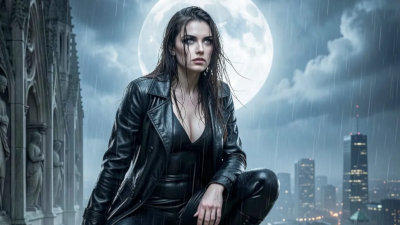
 With the latest accidental project I need to understand the conventions of the Urban-Fantasy Genre. As if I don’t have enough stories in progress…
Urban-Fantasy began as crime-noir stories set in a recognizable modern world, but with magic, and monsters. The protagonist investigates paranormal mysteries and clashes with a supernatural elite hidden from mundane human society. They typically protect the innocent, punish the guilty and bear great personal cost, all in a gritty, hard-boiled style.
If Raymond Chandler wrote Marlowe with vampires, werewolves and fey, you’d get… oh, yeah, The Dresden Files. Or Rivers of London, or maybe The Kate Daniels series.
Urban Fantasy splits into yet more sub-genres such as Young Adult, Paranormal Romance, Cozy and more, and we’re not discussing those here.
When Worlds Collide
The central conceit of Urban Fantasy is the clash of our modern, human cities and the presence of supernatural creatures; witches, warlocks, vampires, werewolves, fae and more. It has to take place in a real or realistic city – New York, London, New Orleans – where the human population is unaware of the hidden society.
The Masquerade is the artful construct by which the supernaturals hide their nature or their existence from human society. We go from the dark decaying underbelly of dive bars and dark alleys, to the wealth and privilege of penthouses and mansions.
An important ingredient is code-switching, the counterpoint of mundane human existence against magical shenanigans. Pay the rent, hold down a job, negotiate a treaty between vampires and werewolves, that kind of thing.
Magical Hacking
The magical element can take many forms; ritual and blood magic, ancient artifacts and relics, urban witchcraft in warehouses and basements. With the usual collection of psychic powers (telepathy, clairvoyance, or mind control), technology often clashes with the arcane.
Disrupting the Status Quo
Humans and the various factions of supernaturals engage in constant cold war. There’s a brittle co-existence until someone breaks the rules; a murder, conspiracy or rebellion threatens the delicate peace. The supernaturals risk exposure. Perhaps it’s big enough to threaten the end of the world.
Character Counts
Into all of this steps our protagonist. By some ‘accident’ they may stumble into the supernatural world as a reluctant hero, dragged into this new world by chance, fate or destiny. The reader learns as they learn. They gain new powers of their own. Maybe they are the prophesied Chosen One to fix the problem and they need to level-up, fast.
Perhaps they are the established supernatural detective, our guide to this new world. A world-weary cynic of questionable morals who must ultimately do the right thing; whatever the cost.
In either case, the protagonist is the bridge between humanity and the supernaturals.
The supporting cast includes family (by blood or found), a sidekick or crew, a foil or mirror, a mentor-figure, and an antagonist with a plan to seize magical power, a magical realm, take over or destroy the human world.
Crime Scene
The framework is generally the crime-noir detective story. There’s an initial mystery, a low-key investigation, the revelation of a far bigger conspiracy and the escalation of stakes to the final defeat of the antagonist. Perhaps the protagonist must save a special individual or save a world.
Whether the protagonist is a curious amateur, experienced paranormal investigator or an actual detective dragged into an other-worldly mystery, the story treads familiar crime-procedural beats.
Detect, Resolve, Repeat
Much or Urban Fantasy spins into novel series, with each book adopting a monster-of-the-week format (think X-Files), with a running series story arc. The found-family grows, alliances break down, the tragedies deepen.
SO are you writng UF now?
Possibly. It’s another project I don’t actually have time for.