
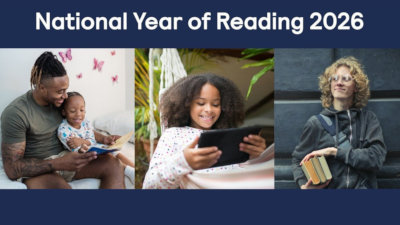
 Inspired or desperate: the UK declares a National Year of Reading 2026. Aiming to curtail a ‘reading crisis’ among children and young people, the UK Government and National Literacy Trust join forces to reverse the decline in reading for pleasure.
Partners and sponsors include the Premier League, Julia Rausing Trust, Arts Council England, the Very Group, and all the major publishers.
A part of the government’s Plan for Change, it asks parents to lead by example and make reading a daily habit and spark a reading revolution.
Surveys in 2025 revealed only one in three 8-to-18-yr olds said they enjoyed reading in their free time.
The last National Year of Reading occurred seventeen years ago. Judged a success at the time, it seems the Reading for Life initiative bears repeating for a new generation.
More than free books (though it helps)
The National Literacy Trust has over 72,000 new books for children in areas with the highest rates of child poverty. The aim; to support positive reading habits at home. It’s CEO cites reading as a foundation skill.
“the key to unlocking potential, strengthening social cohesion, enhancing wellbeing and boosting skills.”
Once again, it falls to parents to read with their children in the early years to build literacy and help them become ‘school-ready.’
A government drive to raise standards in literacy includes £27.7m of primary school funding and targeted support for struggling readers in secondary schools. There is yet another Curriculum and Assessment Review underway.
Been here before?
Can this National Year of Reading 2026 halt and reverse the decline in reading? Is this sufficient funding for a whole nation? And does it address the root causes of the decline? Conflicting issues of time, eroded family incomes, increasing homework, endless school assessments and exams, addictive screen-time and social media? How and when will results be assessed?
Declaring a whole National Year of Reading is easy. Ensuring a successful outcome is not.