
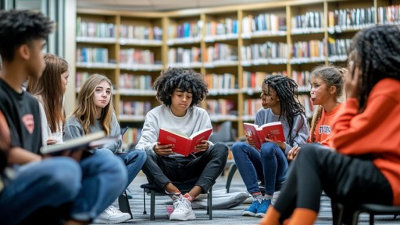
 Results from the latest PISA tests suggests teen reading ability declines in the age of AI.
So says the Organisation for Economic Cooperation and Development (OECD).
The Programme for International Student Assessment (Pisa) assesses teenagers on their ability to solve problems, think critically and communicate. It also asks a wider range of questions about their education in a questionnaire.
The 2026 Pisa report warns of a global decline in reading standards and key skills like the critical evaluation of information from different sources. The report highlights some concerning issues
- the number of “hasty readers” who rush through texts to arrive at quick, incorrect answers almost doubled between 2018 and 2025. Those from “relatively well off” families suffered the greatest drop.
- children’s ability to read complex texts had declined by the equivalent of “two school years” in the last decade.
- excessive use of AI can lead to pupils avoiding looking up information themselves, a process sometimes called “cognitive off-loading”.
Andreas Schleicher, the OECD’s director of education, calls reading the “mother of all skills.”
Research suggests students who read longer books performed best, building the capacity to hold more complex information in mind.
It’s a confusing picture. Significant educational resources went into reading in the last few years with generally positive results. Reading skills bounced back after COVID, but now screentime, smartphones and AI may have thrown those gains into reverse.
The direction of travel suggests the very approach to reading may need a dramatic re-think. Otherwise the generation that needs critical reading the most may prove unready for the new economy. And if they can’t get jobs, they may find they have a lot more reading time.
There are stats then there’s interpretation. What happened this decade? COVID. Schools shut. Average reading hours tanked right at the critical age. You don’t get those back.
Blaming AI may be justified for many things but not necessarily on these stats.
Welcome to the movie ‘Idiocracy.’
Literacy went south with the smartphone.
So the well-off kids who used to have all the advantages are so privileged with toys and shopping they don’t have time to read properly? Well if it drags them down to the level of the rest of us, way to go. They won’t pass their job interviews either.
I had a home-schooled eight year old tell me today that AI is the worst.
All hope is not lost.