
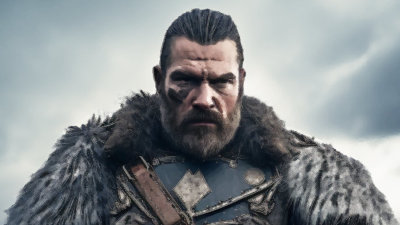
 At the center of my series is an antagonist who is all things to all men: Hero-Saviour-Monster-Villain. My challenge? To write more than a Dark Lord; a flawed man-of-the-people.
The Escarri series is defined by Jo and Varla’s resistance to the Empire and the complicated man who created it.
His backstory belongs to a peasant soldier who rose through the ranks and seized opportunities. Through ruthless victories, he made himself the hero of the people. Kirkuk Atalan took the fight to one enemy after another and defeated them all.
‘Four victories in twelve years, where the Republic had none in decades.’
He invades the Corsair Isles in the West. With their captured fleet he subjugates the Arrionites in the South. Using Arrionite loot, he builds three elite companies of armored soldiers and breaks the Horse Clans in the East. With their captured horses, he smashes the Lacani tribes in the North.
His path is open. He returns to the corrupt capital a conquering hero. The people, tired of graft and decline, throw the crown at him. Atalan is Julius Caesar, Napoleon, Stalin. He crushes dissent, executes or exiles opposition. When the Southern Cants rebel, he lays waste with overwhelming force.
More than a shadow
I could have left him off-stage as a mythic and legendary Dark Lord at the center of a cult of personality. As it is, the entire series has only four scenes in which we see Atalan on the page.
In Jo’s vision, Varla confronts Atalan right before the assassination. In flashback, Atalan comes to interrogate Jo. The Emperor is less imposing in person, with his plain, peasant features, and dyed hair. But he is forceful, calculating, pragmatic. Calm under fire, he doesn’t act on impulse.
In his victory over the Lacani Queen, he kills her sons and takes her daughters hostage.
“Now, witch, you are mine. You will serve me. I will be emperor in Kamsen and you will root out my enemies.”
Finally, Atalan’s Empire Day speech is a carefully stage-managed piece of political theater and the most chilling passage in the whole series.
‘Atalan moved from I and mine to us and yours. How he played them, this Emperor, this common man, this son of the earth, standing before his people. First ‘saving’ the Republic from its enemies, then saving it from its’ government. Saving it from rebellion and fracture. Until nothing remained of the Republic at all, only an Empire, and a silver crown.’
At court, he plays the austere soldier; no gold, no crown, a plain wooden throne. No concubines, no favorites, no allies.
Behind the mask
Atalan’s backstory is a little more complex. What turns his career ambition into a fascist dictatorship?
His self-proclaimed motivation is to restore order to Eskalon after the corruption of the Republic. He would have us believe he wants justice. It’s thinly veiled vengeance.
His true motivation is guilt. While he campaigned in the South, an avoidable outbreak of the Pestilence took his wife and daughter. Atalan believes that is divine punishment for his adultery (not in the pages of the series but in another story).
This loss drives him to a mission; to create a state of discipline, of law and order. To clean the streets, the water supply, the sewers. Secure the borders against all enemies, within and without. But like Ulyusses S. Grant’s post-civil war union, his imperial court breeds its own graft and corruption.
Atalan maintains peace at the cost of freedom. His fanatical Lances round up dissenters. He packs the courts. His chancellor is a financial genius and master embezzler. The Deacons of the Church bow to Atalan, this self-proclaimed son of the faith. Religion becomes another tool of control, alongside commerce and military might.
But what of the man?
In the quiet hours
Does Atalan pray at night? Can he acknowledge the lies he tells his subjects? Does he believe in the divine, in heaven, in hell? His five campaigns show his willingness to order the slaughter of thousands. Many thousands more join the Vanished, silenced in their dissent. Atalan builds a murderous machine of state and convinces his subjects it is all for them.
But what is it all for? The machine serves him and only him. Atalan acknowledges no heirs, appoints no successors, refuses strategic marriage with the aristocrats he hates. He plans for nothing after his reign. He leaves no legacy, his victories as hollow as his soul.
We don’t see his death, only his willingness to fight to the end. Like Macbeth, he is resigned to the inevitability of death, and he will take as many of his enemies with him as he can.
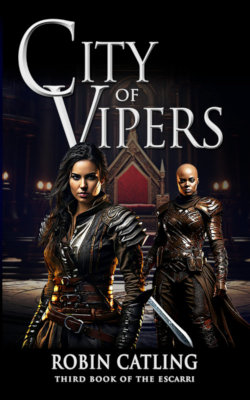 The Escarri series is available on Amazon.
But does all this psychological depth actually work?
Four real-world examples for you; Julius Caesar, Napoleon, Peron. Stalin, Mao, Pol Pot. All self-appointed dictators. I could name others. They exist.
The “Dark Lord” trope is so cliche, evil for evil’s sake.
Motivation all comes down to psychology in the end. Love, money sex, revenge. Occasionally faith/dogma/ideaology.
I hate revisionist storytelling in which the villain is just “misunderstood”
Villain backstories often fall flat
Hated Songbirds and Snakes attempt to rehabilitate the villain. No, Snow is just demented and bad, end of.
I agree we don’t need villain rehabilitation, but hey, Suzanne Collins is in partnership with Hollywood and has a franchise to milk.
‘Let’s do a prequel with a compelling bogey-man and make some $.’ Just like Cruella, Malificent, Magneto in the X-Men prequels.
When the villain does the “idiot plot” and needlessly keeps the hero alive, because Plot Armor.
The villain’s actions excused by their ‘poor me’ backstory.
What about your favorite Paul Atreides. The hero is actually the villain all along.
And Leto Atreides does the worst things to ‘save’ humanity. 3,000-year long game to save a species. A serious case of ‘ends justify the means.’
Curious phenomena of villains as anti-heroes.
Hmm, like the mob boss in Godfather/Sopranos? The gleefully self-aware villain Richard III or Loki? Or any serial killer Hannibal/Dexter?
Flawed heroes are more compelling than paragons of virtue.