
 Can you start a story with the early/late-wide/closeup opening? Or is that impossible?
The opening pages are critical to a novel. You can begin ‘wide’ with a high-level, sweeping, panoramic vista. Or, you can go in with the tightest closeup on a single character, line or thought. Go in early, maybe to a birth or childhood, or else go in as late as possible to the opening hook.
Where do you best begin the story?
It’s another way of asking if I began City of Vipers in the wrong place…?
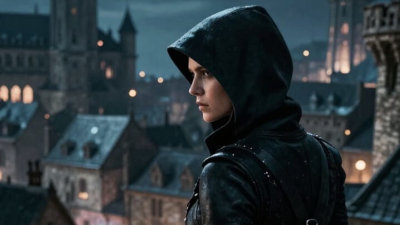
For the third book in my Escarri series, I opened on a ‘wide’ shot of Jo and the crew overlooking the city. They survey hostile territory. Common to many heist and wartime ‘behind enemy lines’ plots, this sets out the initial problem and thumbnails my cast of resistance fighters.
And it comes dangerously close to the dreaded info-dump that every writing coach tells us to avoid. Jo’s Point of View sets up a dangerous, perhaps fatal mission.
Snip, snip
Chapter Two takes place in a closed room. The crew plan their entry. We get problems, challenges, disguises, misgivings. We uncover the group dynamic, their skill-sets and personalities. Hopefully we build some empathy with relatable characters.
Two chapters in, there’s dialog, description, interiority, and foreshadowing. But there’s no physical ‘action.’
Chapter three is the infiltration. The group cross the river bridges into the fortified city. We have tension, we have stakes, we have action, we have suspense.
Should I have opened here, in medias res, at Jo’s shoulder on the bridge? Introduce the other characters as I go, reveal the stakes? Begin in close-up, then pull back for the ‘wide shot?’
Begin here and the infiltration becomes a mystery-thriller. Who are these people? Where are we? When are we? What are they doing? What is this Mission Impossible scenario? Most importantly, why should we care?
Can I sell this whole mission through Jo’s point of view with no context, drip-feeding information as we go? I have to drop all backstory, motivation, character intro’s. Can this opening live entirely in the moment?
TV and movie thrillers try to have it both ways. They’ll put you in the truck or the plane with the infiltration team, then flash-back to the mission briefing. Perhaps they’ll cut to the command center to update the top-brass? You know the format. It’s a well-used convention of war, espionage and heist plots.
But this is a novel, not a screenplay hack to jump-start the plot.
Plot, setting or Character?
Say I skip forward to cross the bridge and enter the city gates? Plot and setting threaten to steal the focus from my protagonist. If I show her engaged in this action, the reader has little to go on. Who is she? A hyper-competent Girl-Boss? A reckless and irresponsible amateur? An obsessed fanatic? A desperate under-dog defying the odds?
Beginning late and in closeup is tense and suspenseful, but will anyone care for a character they don’t know?
But it’s the author’s job to make them care… I know. Shut up.
Cut the Beginning
Many writing coaches tell you your story begins too early. Ditch the first three chapters. I did that for Book One. Actually, I cheated and began with action in a flash-forward to the climax. I did something similar in Book Two.
No way could I do it a third time for Book Three. So should I cut the first three chapters?
1. Arrive at the city; get the lie of the land. Meet the crew.
2. Gather and plan the infiltration
3. Cross the bridge in disguise and hope to sneak in.
Let’s cut the first three chapters. Chapter Four is Jo’s arrival at the rendezvous to discover if the other half of the team made it inside. If I start here, I need all that set-up, character intros, goals, stakes, threats. A big chunk of exposition, but not much action. Ok, cut that.
Trimming the fat
Chapter Five explores the next stage of the infiltration. It’s mostly planning and meeting with allies and helpers. I’d need a whole dump of story-so-far exposition to give it any context. So ditch that?
In Chapters Six and Seven, Jo and Varla go scouting the fortress they have to break into. Do I outline the mission there? Create context? Somehow resist an info dump? There’s not a lot of action. Say we cut those?
Next: Jo reunites with a fortune teller. All of her doubts and fears surface. It explores character through backstory. It says nothing of the mission ahead. I could cut that.
How about the rooftop chase with an antagonist. Can I start there? It’s an action set-piece, in tight close-up. But who are these people? What’s the conflict? Why are they running? Who’s chasing them? What’s the context? Why do we care? It’s a sequence from Assassin’s Creed.
Maybe I start with our next antagonists, an order of psychic priests? Still the same problem: how to introduce my protagonists and their mission? What have the priests to do with it? Where’s the context?
Extremely late
Say we enter really, really late? Let’s say we skip ahead to the infiltration of the palace and the assassination? This is the climax of the story in Act Three. This is now a novella. It’s a frantic sequence of action set-pieces and resolutions without any setup. I’d have to insert multiple flashbacks or info dumps to give it any context. Or else why do we care?
The extreme advice is to begin at the climax and continue the story. But that’s a different story. You don’t begin The Hound of the Baskervilles with the chase across the moor and [spoiler] quicksand. That’s the end.
At the end of Book Three, my survivors leave to begin new lives somewhere else. If I continue from there, then that story would cut the climax of the assassination plot and begin with their arrival in the new place. Everything else is backstory. And we never begin with backstory, right?
Original Sin
If character is the true driver of story, and not plot or setting, then where does Jo’s character arc for this novel begin?
It’s the infiltration of the city. She traveled a long hazardous road to get there. Now everything is on the line. What is her central dilemma?
Does she risk the entire crew to depose the Emperor? Or does she remain on the run, pursued by his entire army? The most dangerous hunters of all will come after her. Make the attempt and go down fighting? Or run and hide until her inevitable capture?
Either way, her found-family is at risk. We need to see them, to know them, identify with them. That’s the opening hook.
So I enter late, overlooking the city in a wide scene. But in Jo’s close point of view, this is the early stage of a dangerous mission. We have stakes and we have scale; this ragged handful of adventurers against insurmountable odds. My opening presents character sketches, expresses fears, doubts and misgivings. I close down choices to drive the characters into the hell-mouth.
I could begin anywhere, but I need to begin here. It’s not perfect. It’s the impossible early/late-wide/closeup opening.
HOw does this square with the idea of establish the ordinary world before you break it?
Nobody has the patience for the Ordinary World phase any more.
Short attention spans. Blamce the TikTok generation.
KM Weiland says cut the setup: start on page 10, or even page 50 if it gets to the action sooner.
No waking up for breakfast, just get on with it.
TV shows now ALL do the cold open in the middle of the action and then flashback ‘3 hours/12 hours/3 days earlier.’ It’s very annoying.
Baiting the hook so you don’t switch channels.
Somebody said ‘start at the end and tell the story from there?’ Were they kidding?
Sounds like satire. Then again, if you’re really creative, maybe you can work it.
Starting at the end:
“We’ve destroyed the ring Mister Frodo. Now what?”
Tolkien: Go back to being a gardener. Get married, have kids, pay your taxes.
“That’s not very exciting.”
Tolkien: That’s life, kid.
‘The Lord of the PTSD’
Mistborn. Begins in the 1000 year reign of the Dark Lord.
Waiting for Sanderson’s prequel where he rehabilitates the villain and does the origin story.